A sound follow-up cadence for personal outreach is three touches: the first email, a short follow-up three to four working days later, and a final note about a week after that. Each one should add something new instead of repeating "just checking in". Stop immediately when someone replies, declines or asks not to be contacted, and stop after the third message regardless.
A three-touch cadence
| Touch | When | Job | Length |
|---|---|---|---|
| 1 | Day 1 | Why them, why now, one clear ask | 80 to 120 words |
| 2 | Day 4 or 5 | Add one new, useful thing; restate the ask | 40 to 70 words |
| 3 | Day 11 or 12 | A graceful close that makes saying no easy | 30 to 50 words |
Count working days, and send in the recipient's morning. Reply in the same thread so the context is there. The free sequence planner lays this out with dates.
What each message should say
First email. One sentence showing you know who they are. One on what you do or want. One specific, small ask: a reply, a fifteen-minute call, the right person to speak to.
Second. Do not write "bumping this". Add something: a relevant example, a result, an answer to the objection they probably had. Then the same ask.
Third. Say it is your last note, summarise in a line, and give an easy exit: "If this is not relevant, no reply needed and I will not follow up again." This message often gets the most replies, because it is honest.
Templates
First: "Hi Dana, I read your post on moving the studio's bookings online. I build small booking tools for independent studios and recently cut no-shows by a third for a pilates studio in Leeds. Would a short call next week be useful? If someone else handles this, I am happy to be pointed their way."
Second: "Hi Dana, a quick follow-up with the one-page summary of that Leeds project, in case it is useful: [link]. Still glad to talk if the timing works."
Third: "Hi Dana, last note from me. If bookings are not a priority right now, no need to reply and I will leave it there. If it comes up later, you know where I am."
Use them as shapes, not scripts. The first line has to be true for that one person.
Personalisation that is real
- Weak: first name and company merged into a generic paragraph.
- Better: a sentence only that person could receive, written by you, stored as a column in your list.
- Best: a reason for contacting them that they would agree is a reason.
A list of thirty people with a hand-written line each will outperform three hundred with a merge field. That is also what keeps you out of spam folders.
Stop rules
- They reply, in any way: the sequence stops. Answer personally.
- They say no or ask to be removed: stop and suppress the address permanently.
- The email bounces: remove it.
- An out-of-office: pause until they are back.
- Three touches with no reply: stop. Try again in several months only with a new reason.
Timing and reply rates
Tuesday to Thursday mornings tend to do well, but relevance matters far more than the hour. If replies are low, look in this order: is the list right, is the first line true, is the ask small enough, is the email reaching the inbox? The deliverability guide covers the last one.
How Drip Send fits
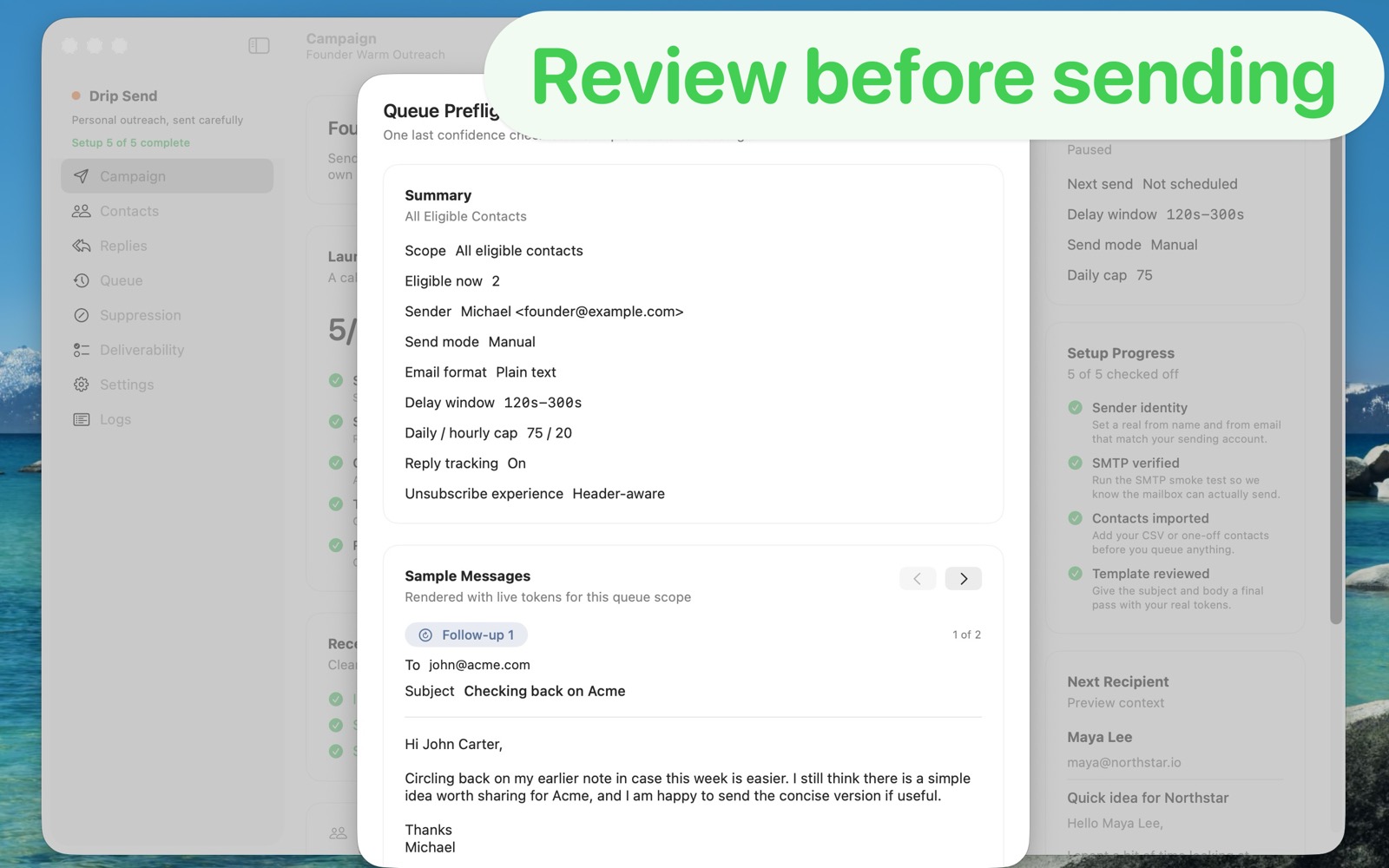
Drip Send is a Mac app for small, personal outreach. You import a CSV, map and review the contacts, preview every personalised message, and send slowly from your own mailbox or SMTP provider with daily and hourly limits. It can send follow-ups and stops when someone replies. Lists and campaign data stay on your Mac. It is a one-time purchase on the Mac App Store, $34.99 at the time of writing.
Free tools: the pace planner, the follow-up sequence planner, the ready-to-send checklist and a CSV contact-review template.
Drip Send is not for purchased lists, mass newsletters or high-volume automation. If you need opt-in broadcasts, use a newsletter platform. Laws on unsolicited email differ by country; check the rules that apply to you and your recipients, and always honour requests to stop.
Common questions
How many follow-ups is too many?
For cold personal outreach, more than two follow-ups after the first email.
How long should I wait?
Three to four working days before the first follow-up, about a week before the last.
Should a follow-up be a reply or a new email?
A reply in the same thread, so the earlier message is visible.
Does Drip Send stop when someone replies?
Yes. Follow-ups stop when a reply arrives.
Can I use this for a newsletter?
No. Use a newsletter platform for opt-in broadcasts.
Plan three careful touches: Get Drip Send.