Cover Story
Stop Designing For Delight, Start Designing For Cognitive Strain
Delight is memorable, but clarity is survival. Great interfaces still work when someone is tired, interrupted, and trying to complete one task in less than sixty seconds.
Cover Story
Delight is memorable, but clarity is survival. Great interfaces still work when someone is tired, interrupted, and trying to complete one task in less than sixty seconds.
Most teams still evaluate UX in ideal conditions. A quiet room, stable connection, and a fully focused reviewer make almost any interface feel usable. Real product usage is different. Users are paying invoices between meetings, editing copy in transit, or fixing urgent mistakes late at night.
Designing for cognitive strain means assuming interrupted attention. The interface should reduce interpretation work and make the next step obvious even when context is limited.
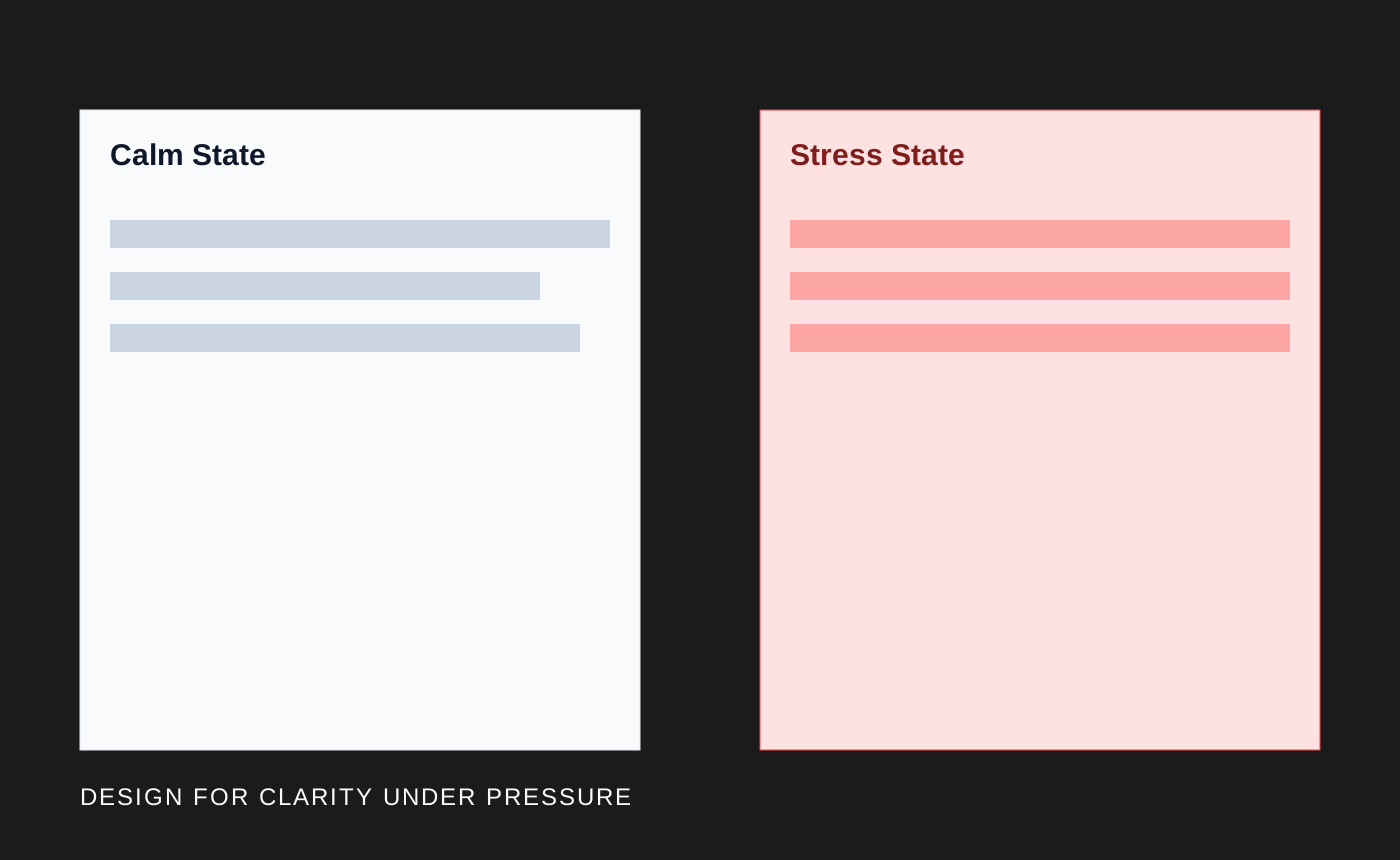
Failure rarely comes from missing UI controls. It usually comes from unclear hierarchy, weak status communication, and too many actions with equal visual weight. Even elegant screens become cognitively expensive when they force users to compare every element before acting.
Delight-first design often over-optimizes for novelty. You get impressive transitions, but brittle recovery paths. You get polished copy, but vague errors that do not explain what to do next.
Replace vague satisfaction metrics with stress-aware measures. Track task completion under interruption. Track recovery rates after failed actions. Track support ticket themes related to misunderstood states. Those signals reveal where polish is masking confusion.
Design maturity is not how attractive the interface looks in reviews. It is how reliably users finish important tasks when conditions are imperfect.
Build This In Yuzool
Use Creative Dashboard tools to prototype, ship, and iterate faster with clearer states and stronger hierarchy.