Built for a mixed product portfolio
Indie businesses rarely have one neat revenue source. A Mac app can sell through Polar, an API through Stripe, a digital product through Gumroad and an iPhone app through App Store Connect. The numbers are all real, but the founder experience is fragmented.
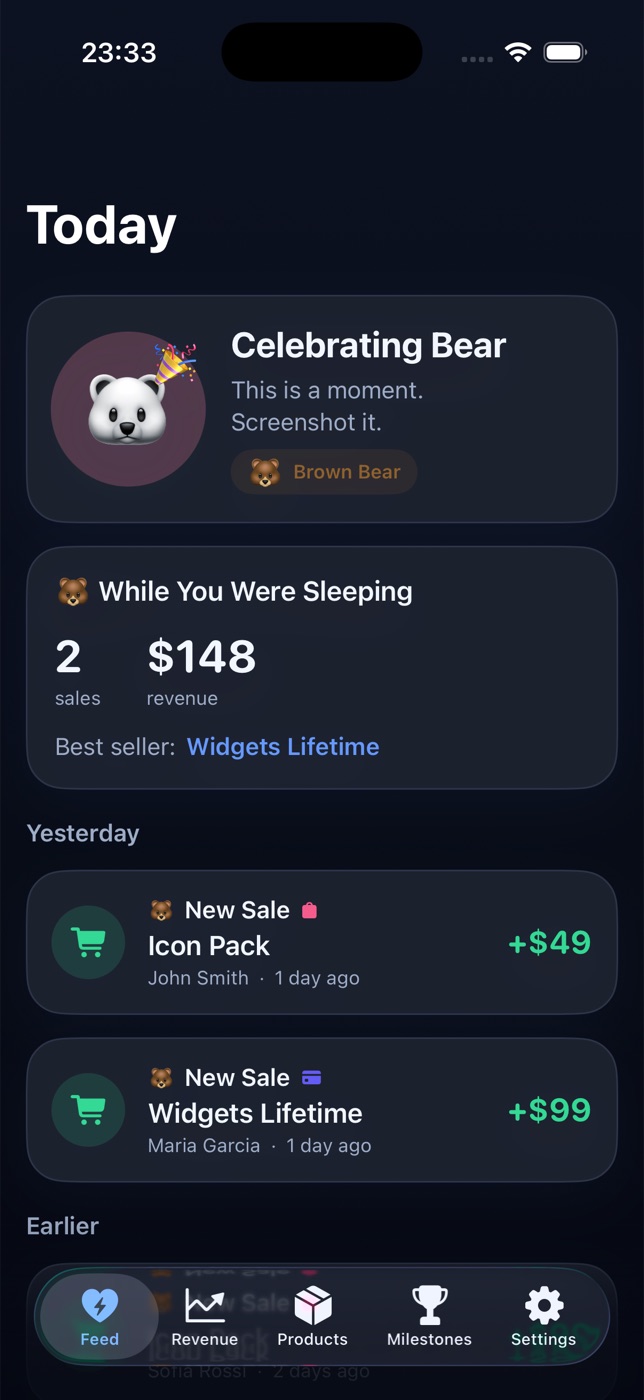
Revenue Bear keeps the daily check intentionally small: a feed of sales and milestones, a product view and enough context to choose the next action.
What makes it useful
One feed
See purchases and renewals from supported sources in chronological order.
Product context
Understand which app or offer caused the movement.
Gentle alerts
Use local notifications for a new sale or milestone when you are away from a dashboard.
Local-first setup
Keep provider credentials in secure device storage rather than creating another hosted account.
Use the signal, then leave
Revenue tracking is useful when it leads to a decision: update a listing, answer a customer, improve a page or keep building. Revenue Bear is deliberately smaller than a full finance suite so the check can stay a minute, not an afternoon.
For an indie business with several small income streams, a calm revenue feed can be more actionable than another large dashboard.