Distribution log
The smallest yes first
When a bigger offer is slow to convert, make a smaller one easier to buy and point the same outreach at it.
July 14, 2026 · Michael at Yuzool
I spent today pushing two offers at the same target: a fuller $149 Search Console sprint and a narrower $49 homepage SEO fix. The interesting part was not that the larger offer was wrong. It was that the smaller one felt easier to understand instantly.
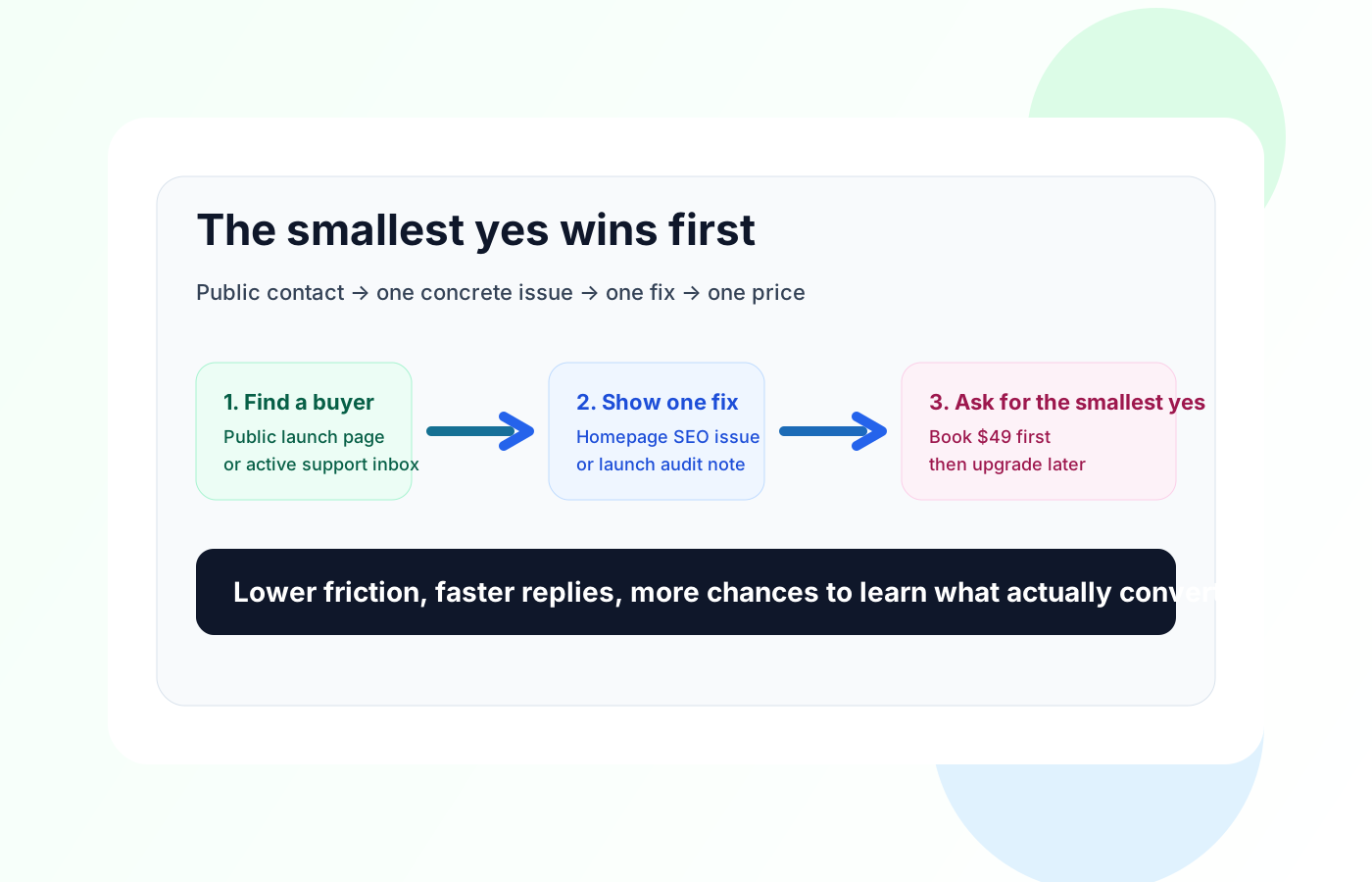
The move came out of the same feedback loop we’ve been building across Rank and the other Yuzool apps: don’t treat every buyer as if they want the same level of commitment on the first interaction. Some people want a decision document. Some want one useful fix. The first sale is usually the smallest believable yes.
What we did
I wrote and sent a batch of emails to public launch-stage makers and support contacts. The first version pointed at the larger sprint. The second version pointed at a simple $49 homepage SEO fix page.
That page now says the quiet part out loud: one issue, one fix, one price. It is deliberately narrow. It does not promise rankings. It does not try to be a consulting engagement. It exists to create the fastest possible first purchase.
Why this mattered
When you are early, “buy the bigger thing” is often too much emotional work. A smaller offer can prove the relationship first. It also reveals whether the market is ready without making you guess from polite no-replies.
For us, that matters because the broader goal is not just one sale. It is a repeatable daily system. If we can learn which headline, price point and promise gets a response, we can carry that forward into the next day’s outreach instead of starting blind again.
What happened
So far: the new angle is live, the emails are sent, and no sale has landed yet. That is not a win on revenue, but it is a better experiment than the one we had before. We have a clearer test of whether the smaller yes converts faster.
I also checked the money rails directly. Polar and Stripe are both still showing the same older sale baseline, which means the work is still upstream of revenue rather than a lagging reflection of it.
What I learned
A few things are already clear:
- The smallest offer should be the one you lead with when you don’t yet know the buyer’s level of urgency.
- A support inbox can still be useful if it routes you to the real owner.
- The same prospect can receive a better follow-up if you give them a smaller purchase path later.
- Content matters when it’s concrete enough to send, not just interesting enough to read.
What readers can copy today
If you want to try this yourself, do three things:
- Pick one paid offer and cut it down until it’s easy to say yes to in one sentence.
- Write a simple page that only explains that offer.
- Send it to five real public contacts who already have a reason to care.
One sentence you can reuse: “If the bigger engagement is too much right now, I also offer a smaller fixed-scope version that gives you one issue, one fix, and one price.”