Home & family / practical systems
A home maintenance record system you can keep up with
A good household record is not a perfect archive. It is a short path from “what happened?” to “what should we do next?” Here is a low-friction way to keep appliance, repair and vehicle details useful over time.
Household records are easy to postpone because each one seems small: a boiler service, a leaking tap, a new fridge, a car inspection, a pet appointment. Then the detail that matters is spread across a receipt, an email thread, a photo and somebody’s memory.
The answer is not to record everything. It is to make a small, dependable home maintenance record system around the things that create future decisions. A useful system lets you answer four questions: what is this, what happened, what did it cost, and what is due next?
Separate the household into records, events and next actions
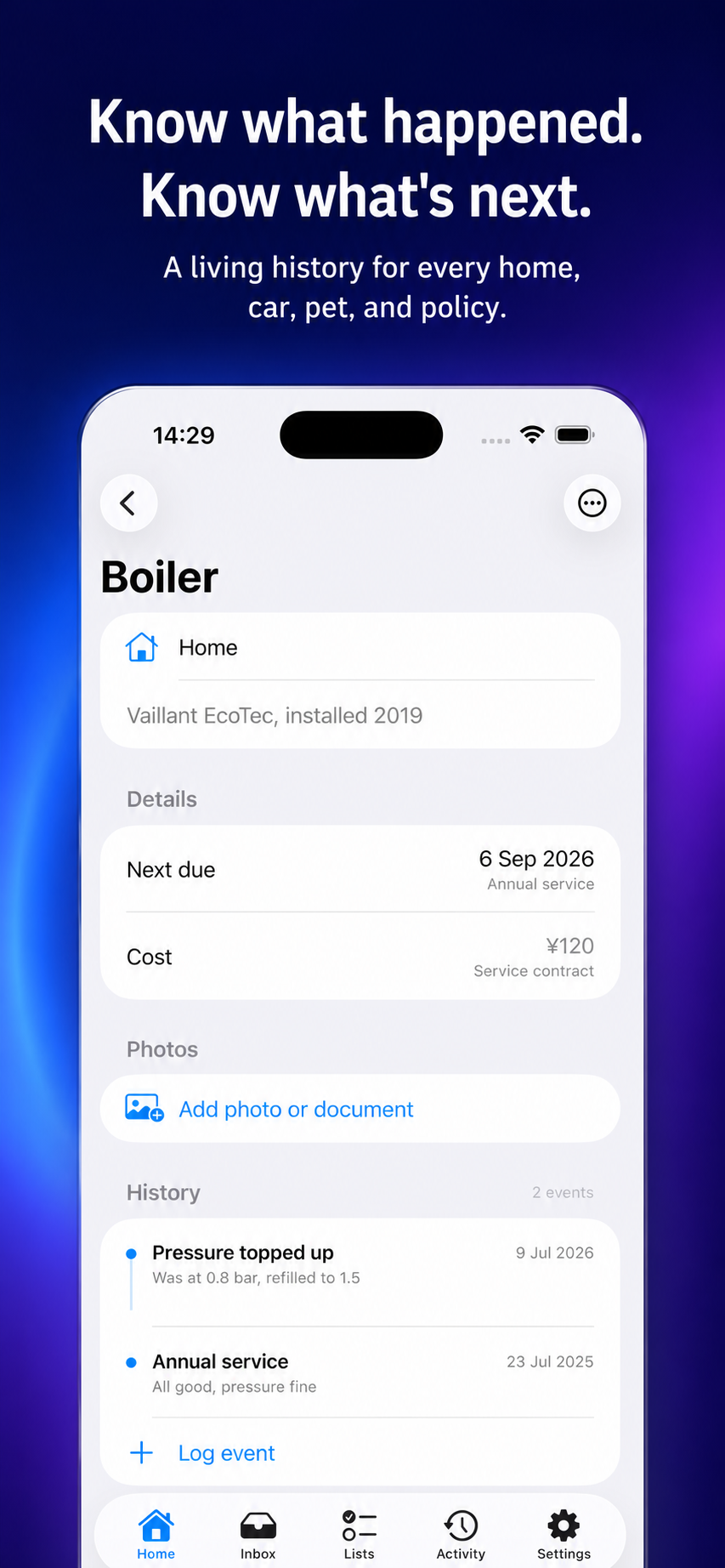
Start with one record for each meaningful thing: the boiler, washing machine, car, smoke alarm, pet or recurring appointment. Give it a name another person will recognize. Then attach dated events to it—purchase, repair, service, inspection or renewal. Keep the next action as a separate date or short reminder.
This structure is easier to maintain than one giant “house notes” document. It also keeps context together. The invoice for the washing machine belongs with that machine; the garage’s note belongs with the vehicle; the appointment preparation belongs with the pet or person it concerns.
What belongs in a household record?
Use a practical minimum. Add a field only when it helps identify, maintain, insure, repair or hand off the item:
- Identity: a plain name, room or vehicle label, and model or serial information if it matters.
- Dates: purchase, last service, warranty end, inspection, renewal or next appointment.
- People: provider or service company, and who in the household is handling the next action.
- Evidence: receipt, invoice, model label or repair photo when you may need to refer to it.
- History: what changed, what was done, the cost and any follow-up recommended.
Keep sensitive details out unless there is a real reason to store them. A household app is not necessarily the right place for every financial, identity or medical document. Choose the level of detail based on the task, and use the original provider or professional record for authoritative instructions.
Use reminders only for decisions with a date
Reminders lose value when every note becomes an alert. Use a date when missing it would create a real cost or inconvenience: arrange a boiler service, renew insurance, check a warranty, book a follow-up or prepare for an appointment. Keep ordinary context in the record without notifying yourself about it.
For recurring household tasks, choose a rhythm that matches the item and local guidance. Do not invent intervals for safety-critical maintenance. Follow the manufacturer’s manual, local regulations and a qualified professional’s advice; use your record to remember what they told you.
Make the record shareable, not dependent on one person
When one person carries all the home knowledge, a busy week or a change in routine can make details hard to retrieve. A shared record reduces that dependency. Use familiar labels, short event notes and a clear next step so another household member can help without learning a private filing system.
Agree on a few conventions: write dates consistently, add an event when work is completed, and mark follow-up as either scheduled or still to do. Do not turn the log into a blame ledger. Its job is to preserve useful context and make the next action easier.
Choose a tool that fits the amount of structure you need
A folder and spreadsheet can work well when the household is comfortable maintaining them. A generic notes app is quick to start but can become hard to search when every item has a different format. A dedicated home organizer is useful when you want records, dates, photos, costs and household sharing connected without setting up a full property-management system.
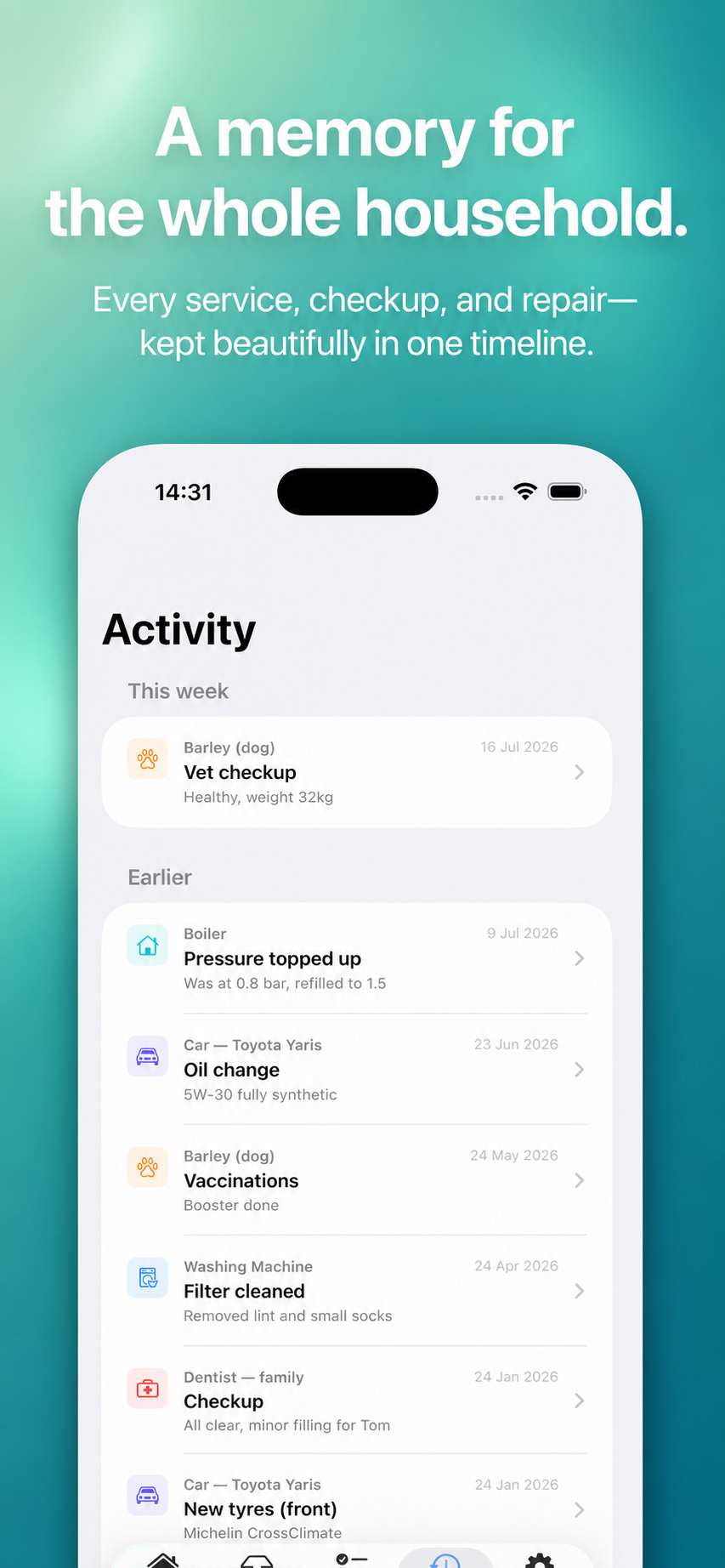
Tend is one option for that lighter workflow on iPhone. It keeps appliances, vehicles, pets and appointments in household records; supports notes, photos, costs, due dates and reminders; and shares through the household’s iCloud. It does not provide repair services, manufacturer warranty verification or professional maintenance advice. Keep those authoritative sources alongside your own reminder rather than treating any organizer as a replacement.
Try Tend free on the App Store ↗
Start with one corner of the home
Choose one appliance or vehicle you know will need attention again. Add its name, the last service date you can verify, a useful note and the next known date. Stop there. When another repair happens, add the event while the receipt or provider details are in reach. A home maintenance system becomes reliable through small updates at the moment they matter—not through a weekend of perfect data entry.