Distribution thinking
Virality in apps is not magic. It is a product decision.
The apps that grow fastest usually do more than solve a problem. They make the act of using them visible, shareable, collaborative, or dependency-forming — and that creates a distribution loop.
July 14, 2026 · Michael at Yuzool
When people say “distribution matters,” they usually mean the same uncomfortable thing: a good app without a way to spread is still hard to sell.
That does not mean every app needs a viral gimmick. It means the product should make one or more of these things true:
- users naturally invite someone else
- the output is useful enough to share
- the app appears inside a public workflow or community
- the free version leads smoothly to the paid version
- the app becomes easy for other tools or agents to call
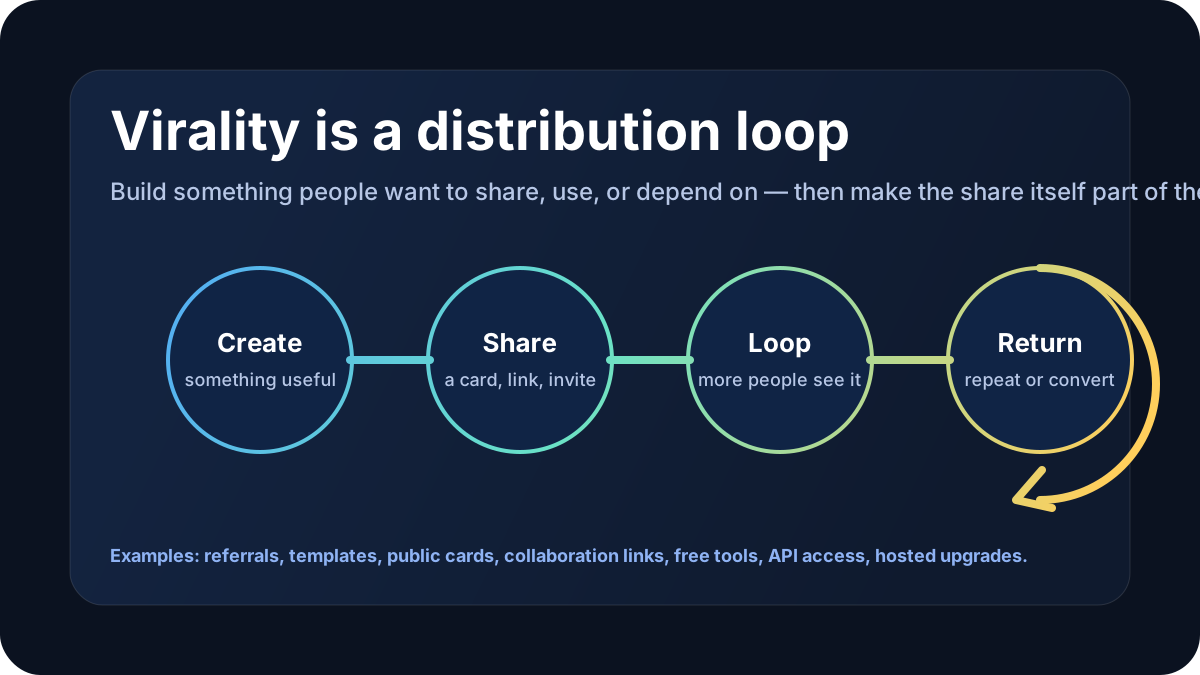
Why this matters so much
Most apps do not fail because the code is bad. They fail because every new customer has to be found manually, one by one, with no loop that helps the product spread on its own.
If acquisition depends only on the founder being online, posting, DM’ing, or cold emailing every day, growth becomes fragile. The ceiling is the founder’s energy, not the market’s appetite.
Virality is one way to escape that ceiling. It is not the only way, but it is one of the fastest ways to make a product feel “alive” in the market.
What good virality actually looks like
Referral virality
The product becomes better when you bring another person in. Dropbox did this beautifully with storage invites.
Collaborative virality
The product creates an invitation or handoff. Calendly, Figma and Notion all benefit from the fact that other people must see or use the output.
Content virality
The app creates something people want to post: a card, chart, checklist, screenshot, report, benchmark or badge.
Workflow virality
The product lands in a public workflow like Reddit, GitHub, Slack, or a browser community where the pain is already visible.
Open-source + hosted
The free layer builds trust and reach, while the hosted layer is where serious users pay for convenience, scale or time saved.
Agent/API virality
When an app can be called by scripts or agents, it becomes easier to embed in other workflows and easier to recommend.
Solid examples worth learning from
Dropbox made the invitation mechanic part of the product. You could use it alone, but sharing unlocked more value.
Calendly spreads because every meeting link is a tiny distribution object. The recipient does not just learn about Calendly — they interact with it.
Figma grew because design is collaborative. A file is almost never private for long, so each new user creates more exposure.
Notion benefits from templates and shared pages. A good page becomes a forwardable artifact.
Open-source + hosted businesses work when the open-source layer is genuinely useful on its own and the hosted version removes a real operational burden. The public repo earns trust, while the service sells convenience, scale or support.
Agent-ready tools are increasingly interesting because they can be consumed by other software, not just by people. That is another kind of distribution: the app becomes part of someone else’s workflow engine.
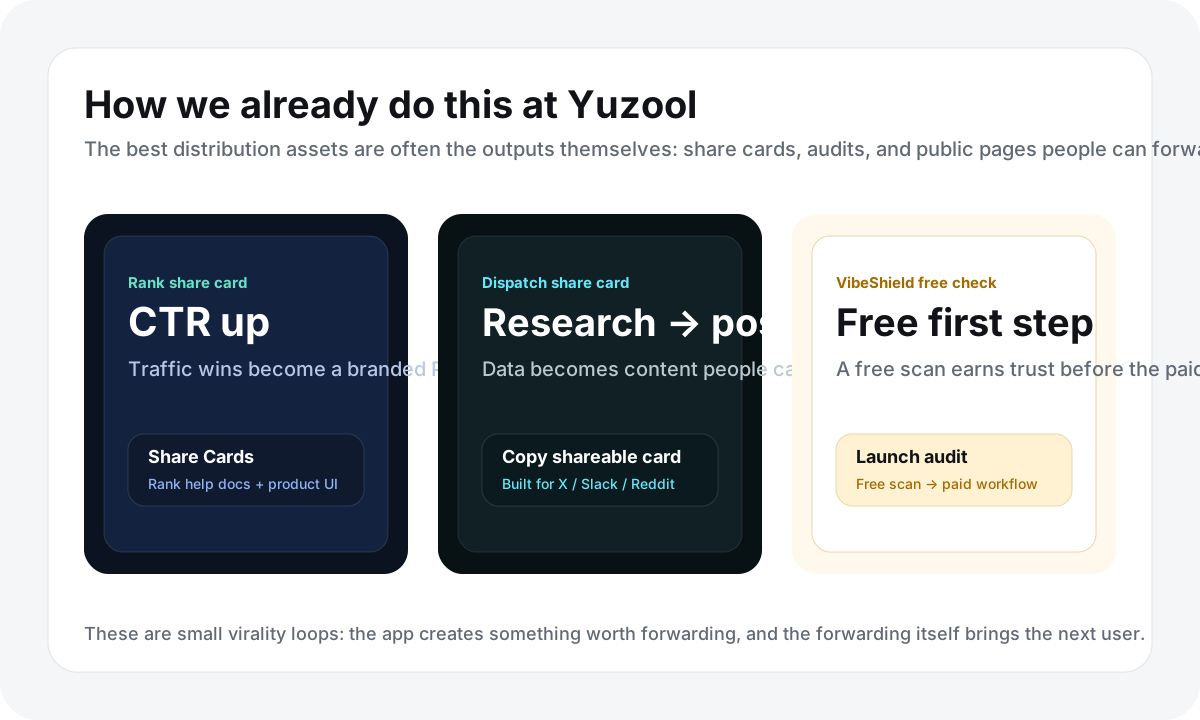
How we already do this in our apps
Rank now includes Share Cards that turn traffic wins, audit progress, CTR opportunities and AI visibility snapshots into branded PNGs. That makes a result easier to post, forward or use in a sales conversation.
Dispatch does something similar with its shareable cards. A research result becomes a visual asset you can drop into X, Reddit, Slack or a launch thread. That is a distribution object, not just a report.
These are not huge viral mechanics. They are small, practical loops. But that is usually how real distribution works in indie software: not one giant explosion, but many smaller surfaces that make the product easier to pass around.
Ideas worth building into a product
- one-click share cards for wins, summaries, audits, and reports
- public templates people can remix and repost
- collaboration links or review pages that require another person to see the result
- free tools that reveal a real problem before the paid upgrade
- badge or leaderboard outputs that users are proud to show
- embeds and widgets that keep your branding attached to the utility
- hosted versions of open-source tools for teams who want less setup
- API or agent access for workflows that live outside your UI
What to avoid
Do not force virality where the product does not naturally support it. Fake invitations, spammy sharing, “invite three friends” mechanics, and gimmicks people resent are not a substitute for usefulness.
The best virality is usually a side effect of something people already want to share: a result, a card, a link, a page, a report, a score, a badge or a useful output.
The simplest test
Ask: if someone gets value from this app, what is the smallest artifact they would want to forward to somebody else?
If you can answer that cleanly, you probably have a distribution surface worth building.
If you can’t answer it yet, that is often the growth problem hiding inside the product.