Revenue Bear
Why founders check revenue too often
Refreshing dashboards is rarely just about the number. It is a tiny search for proof that the work is alive.
July 10, 2026 · Michael at Yuzool
There is a funny little habit that appears once you sell something on the internet: you start checking the dashboard.
At first it feels reasonable. You launched a product. You want to know whether anyone bought it. Then the habit gets smaller and stranger. You check while making coffee. You check after a walk. You check before bed. Sometimes you check even though you know nothing new has happened.
I do not think this is only vanity. For indie founders, revenue is feedback. It is one of the few signals that cuts through all the noise and says: someone cared enough to pay.
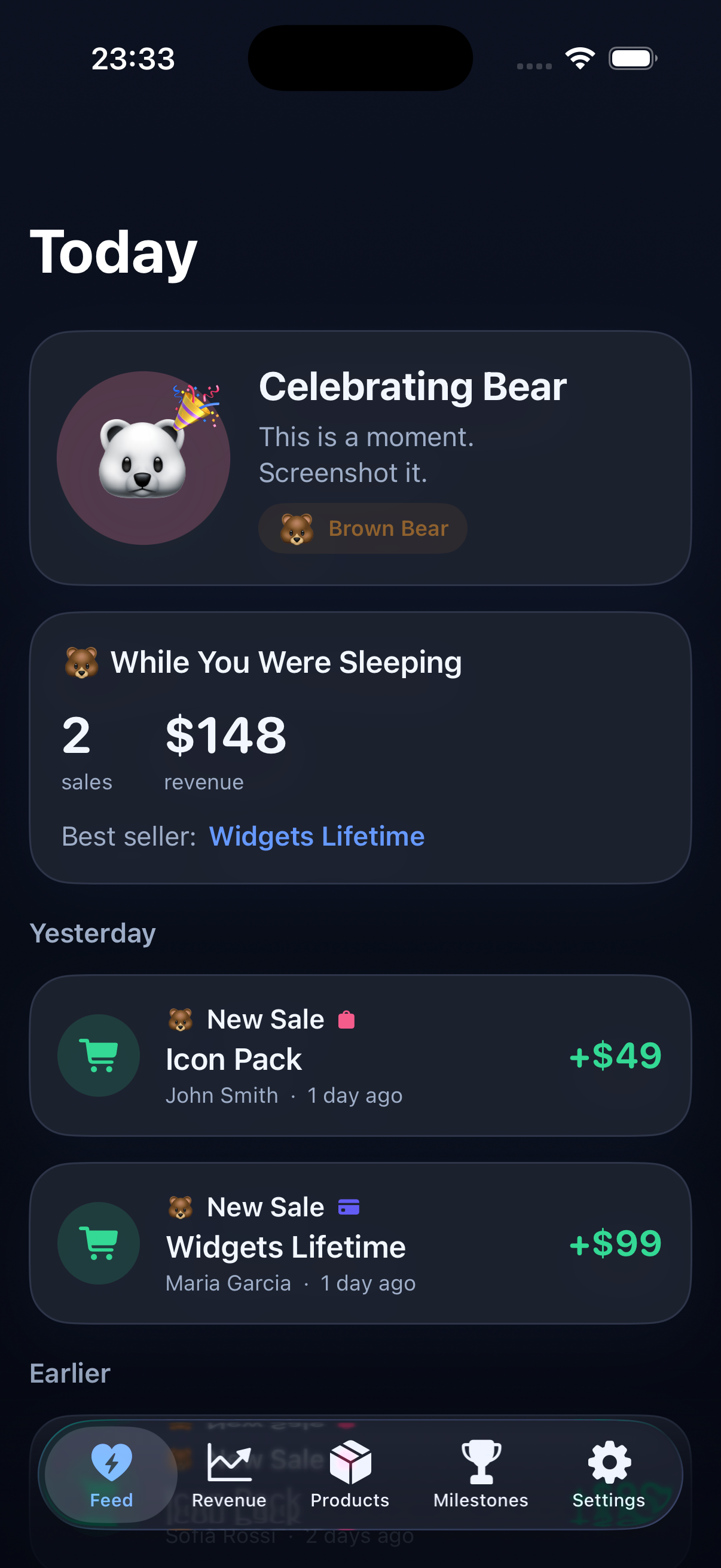
The check is looking for momentum
When you build alone, a lot of the work happens without applause. You improve copy, fix bugs, change a screenshot, write a page, answer support, tweak pricing and wait.
Revenue becomes a proxy for movement. Not the whole truth, but a useful pulse. A sale can make a quiet day feel connected to the outside world. A renewal can remind you that something you built is still useful weeks or months later.
The problem is that the pulse is usually spread across too many places. Stripe has one piece. Polar has another. Gumroad may have the free download. App Store Connect has the app sales. Paddle or Lemon Squeezy may still be part of the older business. The founder ends up doing emotional arithmetic across tabs.
That arithmetic is surprisingly tiring. It is not hard because the math is difficult. It is hard because each dashboard pulls you into a different frame of mind: subscriptions here, one-off payments there, app sales somewhere else, downloads in another place entirely.
A founder does not always need a complete analysis. Sometimes the useful thing is simply knowing that the day has a shape.
Dashboards are good at admin, bad at reassurance
Payment dashboards are important. You need them for refunds, customer records, exports, taxes and detailed investigation. But they were not designed for the tiny daily question most founders ask: did anything happen?
That question needs a different shape. It needs a feed, a monthly goal, a bit of context, and enough restraint that you can check once and return to work.
The difference is the same as looking at a bank statement versus hearing the shop bell ring. One is the official record. The other tells you the business is alive.
For solo work, that emotional layer matters more than people admit. It is easier to keep improving a product when the feedback does not feel buried.
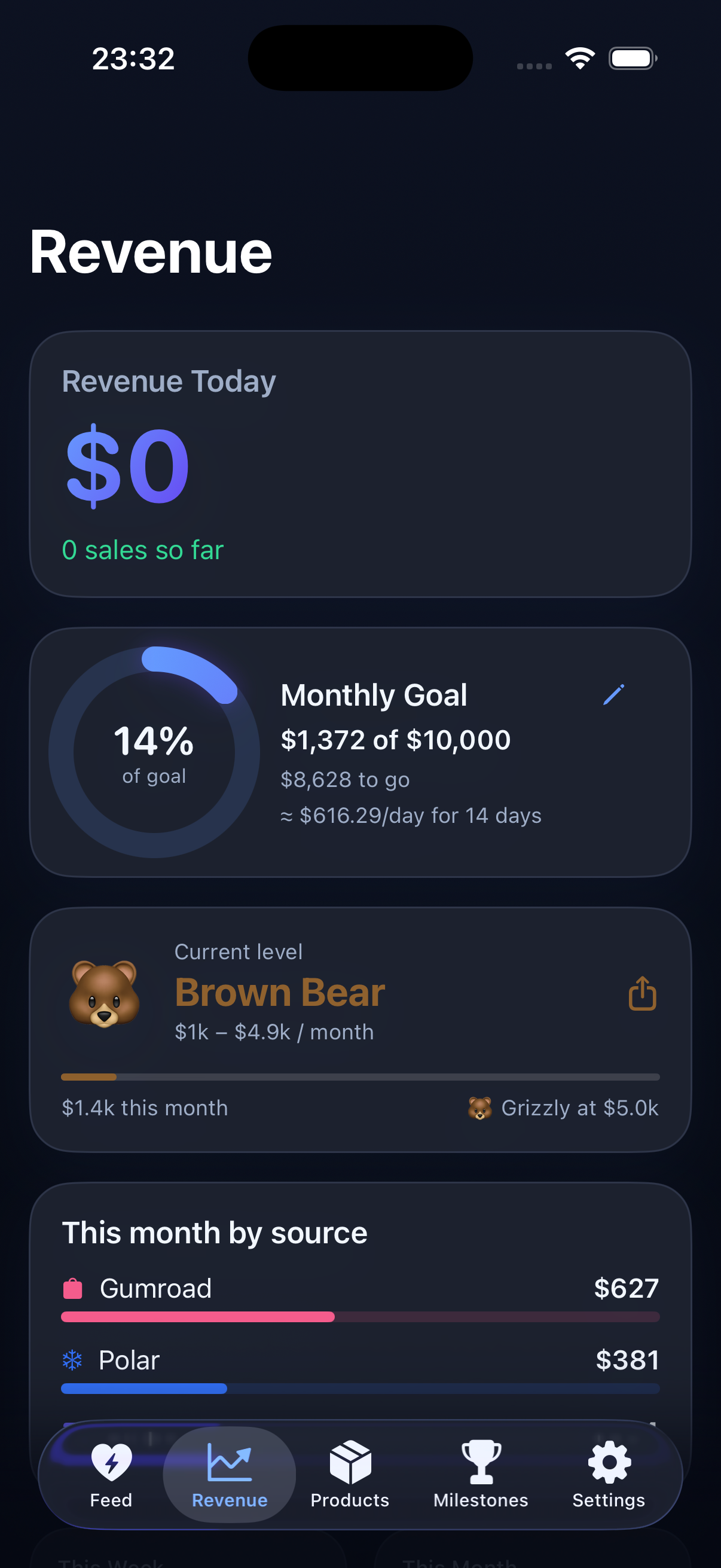
The danger is letting the check become the work
Revenue is feedback, but refreshing is not progress. If the dashboard check starts replacing the next useful action, it becomes a little trap.
The healthier loop is: check the signal, notice the pattern, then do the work that can change tomorrow. Improve the product page. Write the support reply. Ship the bug fix. Make the onboarding clearer. Add the missing screenshot. Send the update email.
A good revenue tracker should make the feedback easier to see, then get out of the way.
A better ritual
The healthier ritual is small: check once in the morning, once after a launch or update, and maybe once at the end of the day. If something moved, ask why. If nothing moved, choose one action that can improve the odds tomorrow.
That action should be boring and controllable. Add the missing FAQ. Fix the broken CTA. Send a launch note. Make the pricing clearer. Request indexing for the new page. Reply to the person who asked a real question.
The revenue check should become the start of a useful decision, not the end of your attention.
What I want from this kind of app
I want the numbers to feel close, but not controlling. I want the app to make small progress visible without pretending every day needs to be a record day.
That is the design line behind Revenue Bear: make the business feel alive, private and motivating on the phone, while leaving the serious admin to the original platforms.
The point is not to check revenue more. It is to make the check honest enough that you can stop checking and go back to building.
That is also why the “bear” part matters more than it might seem. A small business can be stressful and lonely. A bit of warmth around the numbers can make the feedback feel less clinical, without making the numbers less real.