Freelance work
How to Track Cash Expenses as a Freelancer
A simple cash expense tracking workflow for freelancers: record the amount, date, purpose, category and receipt while the purchase is still easy to remember.
Published September 13, 2026 · Michael at Yuzool
Cash expenses are easy to lose in a freelance business because there may be no bank transaction to remind you later. A taxi, small supply purchase or parking fee can disappear into the week unless you record what it was for while the context is still fresh.
You do not need a complicated bookkeeping system to improve this. Capture a short, consistent record at the time of purchase, keep evidence where available and review the entries before they turn into a month-end memory test.
Record five details while you still remember
For each cash purchase, note:
- Date and amount, including the currency if it was paid while travelling.
- Merchant or payee, using a name you will recognise later.
- Business reason, in one short phrase such as “materials for Oak Street sign install.”
- Client, project or category, if you need to distinguish billable work from general overhead.
- Receipt or other supporting note, where one was issued and keeping it is appropriate.
The explanation is often the missing piece. “Coffee, 8.50” does not tell you whether it was a client meeting, a personal purchase or a workday expense. A short note can preserve the context without turning capture into a journal entry.
Keep cash spending separate from cash received
An expense is money your business paid out. Cash received from a client is income, even if you use the same wallet or cash box. Record incoming cash separately with the client, date, amount and invoice or work reference. That makes later reconciliation less ambiguous and helps you avoid accidentally treating money you received as a reimbursement or expense offset.
If you use an envelope or petty-cash float for recurring purchases, record the starting amount and each withdrawal. The remaining cash should be explainable from the entries. Refill the float only after you have recorded what was spent, rather than estimating backwards from what is left.
Attach context to project spending
When a cost belongs to a client project, write the project name at capture. If the expense may be reimbursable, mark that separately and check the contract or client policy before adding it to an invoice. A cost can be related to work without automatically being billable.
For shared or partially business-related purchases, make the split explicit. Keep the original amount and note how you arrived at the business portion; do not rely on a future memory of “about half.” Ask your accountant how to treat expenses under the rules that apply to your business and location.
Make a weekly review small enough to keep
Choose one regular time to scan the week’s cash entries. Check for missing receipts, unclear purposes, duplicate records and items that should be assigned to a client or project. If you cannot remember why a purchase happened, mark it for follow-up instead of inventing a reason that sounds plausible.
At month end, compare the cash log with receipts, project records and any cash-float balance. This is a completeness check, not a substitute for your accounting system or tax records. Keep source documents according to the requirements that apply where you operate.
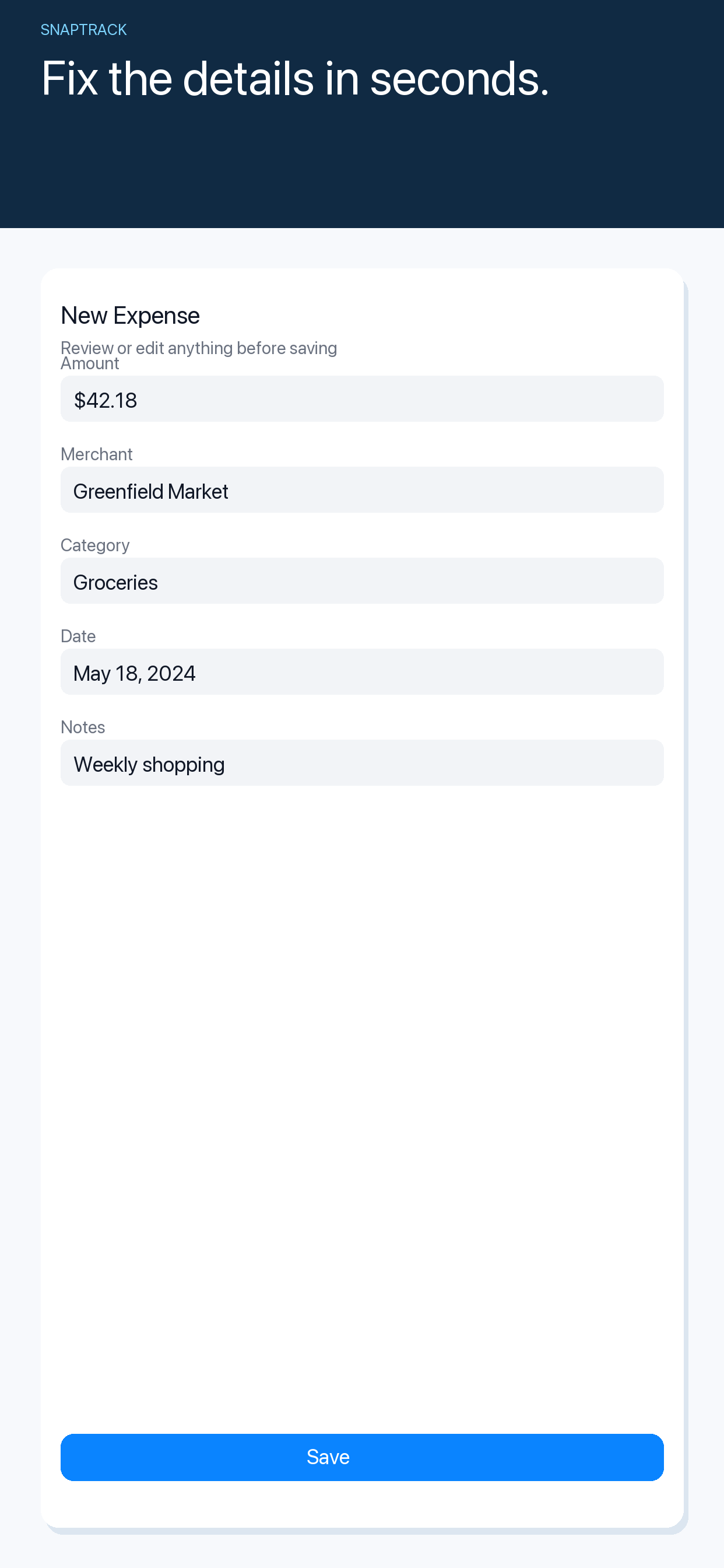
SnapTrack can scan a receipt or keep a manually entered expense with its details on iPhone. It is useful when you want a searchable record alongside the paper evidence; it does not determine tax deductibility or replace professional bookkeeping. See the SnapTrack expense tracker or browse the Yuzool app catalogue for other focused tools.
The reliable cash-expense habit is deliberately plain: write down the amount, date and reason before the day moves on. A few honest details now are more useful than a perfectly formatted spreadsheet filled in from guesswork months later.