Freelance work
Freelance Client Handoff Report Template: What to Include
A practical client handoff report template for freelancers after a site visit or project meeting, with sections for decisions, evidence, open questions and next steps.
Published September 18, 2026 · Michael at Yuzool
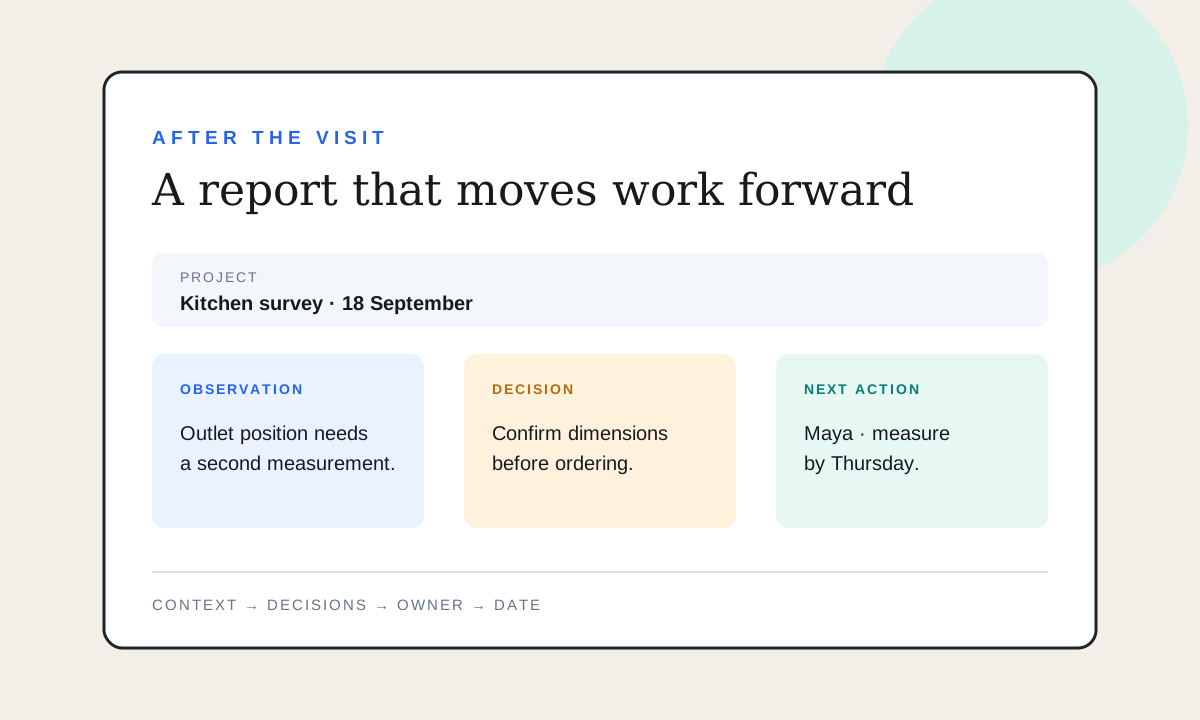
A useful client handoff report turns a conversation, visit or completed piece of work into a shared record of what happens next. It does not need to be a long document. It needs enough context that the client can understand the outcome later, and enough ownership that follow-up does not disappear into an inbox.
Use this lightweight structure after a consultation, inspection, design review, installation or project milestone. Remove sections that do not apply; a template should make the handoff easier, not turn a small job into paperwork.
Copy-and-adapt handoff template
CLIENT / PROJECT:
REPORT DATE:
VISIT OR MEETING:
PREPARED BY:

PURPOSE
What was the visit or conversation meant to resolve?

SUMMARY
What is the short version the client needs to know?

OBSERVATIONS
- What was seen, tested, reviewed or completed?
- Which photos, files or measurements provide useful context?

DECISIONS MADE
- Decision:
- Agreed by:
- Date or condition that could change it:

OPEN QUESTIONS
- Question:
- Who will answer it?
- By when?

NEXT ACTIONS
- Action:
- Owner:
- Due date:

ATTACHMENTS
- File or photo name, with a one-line explanation:

FOLLOW-UP
What will happen next, and when should the client expect an update?
What makes each section useful
Give the work a clear identity
Include the client, project, date and visit type near the top. If you support multiple clients, these details make the report searchable and prevent a photo or decision being separated from the job it belongs to. Use the client’s preferred project name rather than an internal shorthand only you understand.
Separate observations from decisions
“The north wall is damp” is an observation. “We will ask the building manager to inspect the gutter before ordering materials” is a decision and next step. Keeping those separate helps the reader distinguish what you saw from what the group agreed to do.
When the evidence is uncertain, say so. Note what you could not inspect, what still needs measurement, or which assumption the recommendation depends on. A careful caveat is more useful than a confident sentence that later has to be walked back.
Turn every follow-up into an owned action
“We should send a quote” is easy to forget because nobody owns it. “Maya will send the revised quote by Thursday” gives the action a person and a time. If the date depends on another answer, state the dependency rather than inventing certainty.
Keep the action list short and specific. If a task needs several steps, link to the project plan or create a separate task rather than hiding a mini-project inside one bullet.
Make evidence understandable
Attach only the photos, measurements or files that help explain the outcome. Give each a useful name and a caption: “Outlet position on west wall, measured from door frame” is more useful than “IMG_4182.” Check that the attachment contains no unrelated client or personal information before sharing it.
Close the loop
End with the next expected contact: who will follow up, what they will provide and roughly when. If nothing is needed from the client, say that too. A handoff is complete when both sides know whether the work is waiting, moving or finished.
A quick quality check before sending
Read the report once as the client, not as the person who attended the visit. Can they tell what happened without being in the room? Are decisions clearly distinguished from suggestions? Does each open question have an owner? Are dates realistic? Do the attachments match their descriptions?
For a recurring workflow, save a clean master copy and duplicate it per project. Keep private working notes separate from the client-facing report, and share only what the client needs to act. A consistent format makes follow-up calmer without forcing every job into the same level of detail.