Apps & tools
An Invoice App for Freelancers With Retainer Clients
A simple retainer invoicing workflow for freelancers: keep recurring work clear, send consistent invoices and follow up on overdue payments without a large accounting system.
Published September 24, 2026 · Michael at Yuzool
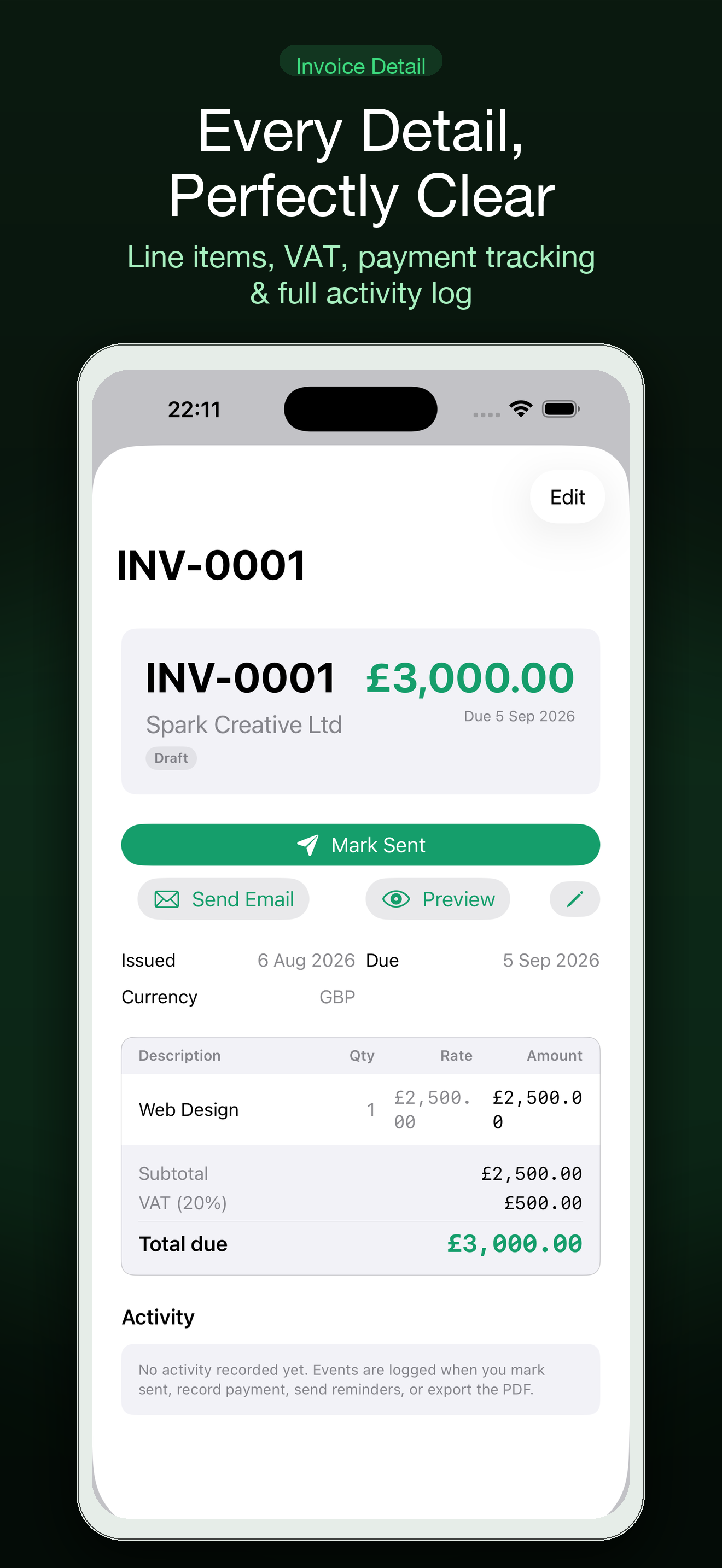
Retainer work is predictable until the invoice becomes an afterthought. The same client, scope and amount return every month, but a busy freelancer still has to check the billing period, add any approved extras and send a clear request for payment.
A lightweight retainer workflow keeps that repetition from becoming a source of small errors.
Define what repeats
Write down the recurring service, billing period, due date and what is outside the retainer. “Monthly design support” is less useful than “up to ten hours of design support from the first to the last day of the month, excluding rush work.” Clear language makes the invoice easier to understand and makes scope conversations less awkward.
Keep the recurring line item stable. Add one-off work as a separate line with a short description and the approval date. This gives the client a useful record without turning the invoice into a project report.
Send on the same rhythm
Choose one day for preparing and sending retainer invoices. A predictable rhythm helps the client’s accounts process and helps you notice a missed payment earlier. Before sending, check the client name, billing period, amount, tax information and payment instructions.
Settle is a focused invoicing app for freelancers who want to create clear invoices and keep payment admin moving without adopting a full accounting suite. The recurring invoice guide covers the basics of setting up a repeatable flow.
Follow up without changing the tone
If an invoice passes its due date, send a short reminder with the invoice number, amount and payment link. Assume it may be an oversight. A consistent reminder template is easier to send than a message written from scratch while you are already wondering whether to chase it.
Track the status—sent, paid, partly paid or overdue—somewhere you will actually check. The goal is not more administration. It is knowing which invoices need one small next action.
Review the retainer quarterly
Every few months, compare the retainer to the work it is generating. If the client regularly needs more than the agreed scope, propose a change rather than quietly absorbing the difference. If the scope has shrunk, simplify the arrangement.
Good retainer invoicing is a quiet system: the client knows what they are paying for, and the freelancer knows what has been paid.