Makers & Design
How to Measure Product Hunt Traffic After Launch
Track Product Hunt visits beyond launch-day upvotes: tag links consistently, check landing pages, measure key actions and separate referrals from campaign traffic.
Published October 6, 2026 · Michael at Yuzool
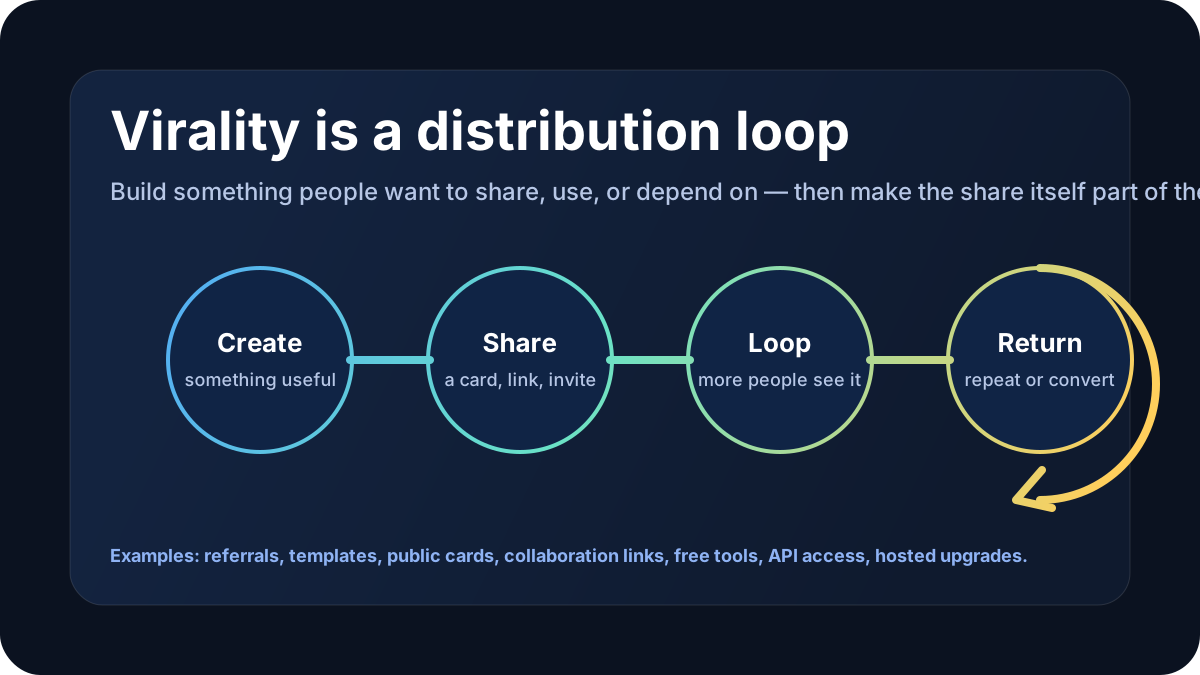
A Product Hunt launch can keep sending visitors after the launch-day conversation has moved on. To tell whether those visits are useful, measure the path from the Product Hunt link to a meaningful action on your site—not just the upvotes, comments or launch-day spike.
Give every launch link a consistent campaign label
Use a tagged destination URL for each product or campaign. A simple convention is:
?utm_source=producthunt&utm_medium=referral&utm_campaign=product_name_launch
Keep the source and medium stable, then use the campaign value to name the launch. If you need to compare two placements, such as the maker comment and product website field, add a content label such as utm_content=maker_comment. Do not use a different spelling or capitalization for each link; inconsistent labels split one campaign into several rows.
Before launch, open each final tagged link and confirm that it reaches the right page and keeps its query string after redirects. Use a test label for your own check so you can exclude your visit from the results.
Separate referrals from tagged campaign visits
Analytics tools may report both a referring domain and a campaign source. Those are related clues, but they are not interchangeable. A referrer is the page or domain that the browser says linked to your site. A source label comes from the campaign parameters or other attribution rules. Privacy settings, in-app browsers, copied links and redirects can make the two counts differ.
Treat a campaign-tagged visit as evidence that a tagged link was used, not proof that every Product Hunt visitor was counted. Treat a Product Hunt referrer as evidence of a browser referral, not a complete tally of launch exposure. Compare both over the same date range and investigate large mismatches before drawing conclusions.
Follow the visitor past the landing page
Start with the exact landing page. Does it answer the promise made on Product Hunt? A visitor who arrives on a generic homepage may have to hunt for the product they just saw. A direct product page or a focused launch page usually makes the next step easier to understand.
Then track a few meaningful actions. For a software product, these might be a demo opened, a download link clicked, an App Store link opened, a checkout started or a contact form submitted. Use names that say what happened, such as rank / demo or palm / download, instead of a generic label like button-3.
Keep the event list short enough to interpret. A click on an App Store link is a useful intent signal, but it is not the same as an install. A download-button click is not proof that someone launched the app. Checkout starts and completed purchases are different events. State those distinctions plainly in your weekly review.
Read the results as a funnel, not a verdict
Use a small table for each launch:
| Stage | Question |
|---|---|
| Product Hunt activity | Did people notice and engage with the launch? |
| Tagged site visits | Did the link bring people to the intended page? |
| Key page actions | Did they open a demo, download or store listing? |
| Outcome | Did a trial, purchase, signup or useful conversation follow? |
If Product Hunt activity is high but tagged visits are low, make the product promise and destination link clearer. If visits arrive but few people take the next step, inspect the page’s first screen, loading speed, proof and call to action. If people click through to a store but installs or purchases remain unclear, use the platform’s own reporting where available; website analytics cannot observe every action inside the App Store.
Do not call a launch successful or unsuccessful from one small sample. Compare a consistent window—such as the first seven days—with another channel or your normal baseline. Note what changed, what remained uncertain and what you will test next. For Google search traffic, keep the separate Search Console view in the loop; Rank is built around reviewing search queries and deciding which page to improve, while referral analytics answers a different question.
Keep the campaign easy to repeat
Write down the exact tagged URL, landing page, event names, launch date and review date before posting. Afterward, record the actual results and one decision. That small habit makes the next launch easier to compare and prevents a dashboard full of unnamed button clicks from becoming another source of guesswork.
Product Hunt is one distribution channel, not a complete attribution system. The useful result is a clearer picture of which message earned a visit, where the visitor landed and whether the next step made sense.