Freelance work
Overdue Invoice Reminder Email Template for Freelancers
A polite, practical overdue invoice reminder email template for freelancers, plus a simple follow-up sequence that keeps the relationship professional.
Published September 12, 2026 · Michael at Yuzool
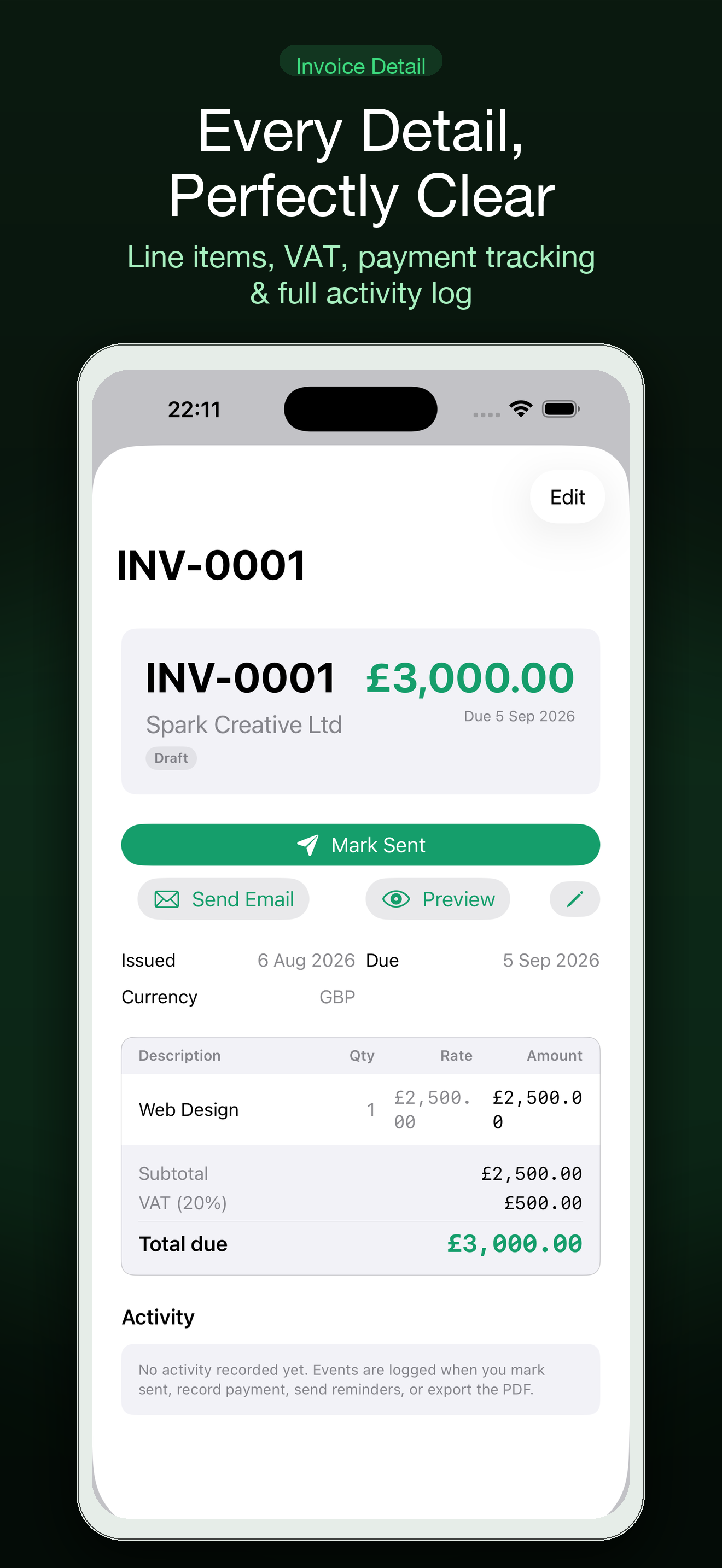
An overdue invoice email does not need to sound like a debt-collection notice. Most of the time, the useful first step is a calm message that identifies the invoice, repeats the due date and asks when payment is expected. Make it easy for the client to spot the document and easy for both of you to agree on what happens next.
The key is to separate a routine reminder from a difficult payment conversation. Start with the facts and give the client a chance to tell you if something has gone wrong.
A polite overdue invoice email template
Subject: Quick follow-up: invoice [number] due [date]
Hi [name],
I’m following up on invoice [number] for [project or service], for [amount]. It was due on [date]. I’ve attached the invoice again in case it’s helpful.
Could you let me know when payment is expected? If it has already been sent, please ignore this note — and thank you.
Best,
[your name]
Keep the first reminder short. The client does not need your complete payment history or an apology for asking about agreed work. They do need enough detail to recognise the invoice and take the next step.
Check the basics before you send
Confirm that the invoice actually reached the right person and that its payment details are correct. Check the invoice number, amount, due date and any purchase-order reference the client requested. If the invoice went to a shared accounts address, keep that recipient on the message and copy your project contact only when it makes sense for the relationship.
Use the payment terms in your agreement rather than inventing a new deadline in the reminder. If the due date is ambiguous, clarify it before treating the invoice as late. Contract terms, late fees and collection rules vary by agreement and location, so get qualified advice before adding charges or making legal claims.
A measured follow-up sequence
There is no magic number of days that fits every client. A simple sequence can keep the work visible without turning it into an automated barrage:
- First reminder: shortly after the due date, resend the invoice and ask for an expected payment date.
- Second check-in: if there is no reply after a reasonable interval, forward the original thread and ask whether the invoice is with the right person.
- Direct conversation: if the balance remains unresolved, contact the client through the agreed channel and propose a clear next step, such as confirming a payment date or discussing a payment plan.
Pause the sequence if the client replies. A genuine question about the work or invoice deserves a human answer, not another scheduled nudge.
Keep a useful record
Record when you sent the invoice, when you followed up and what the client said. Keep the agreed scope and any change requests nearby, especially if the unpaid amount relates to a milestone. This creates a clean history without requiring you to reconstruct the conversation from memory later.
If you send invoices regularly, an invoicing workflow can keep client details, invoice status and payment reminders together. Settle is made for creating and tracking freelance invoices across Mac and iPhone. If you only have one late payment to check, try the free invoice follow-up calculator to see how overdue it is and prepare a next step.
The best reminder is clear, proportionate and easy to answer. State what is outstanding, ask one direct question, and leave room for the client to explain a delay. That protects the working relationship while still treating your own time and cash flow as real.