Apps & Tools
How to Practise Boxing Alone at Home
A practical solo boxing routine for home workouts: warm up, use short rounds, focus on one form cue and review progress without treating an app as a coach replacement.
Published October 3, 2026 · Michael at Yuzool
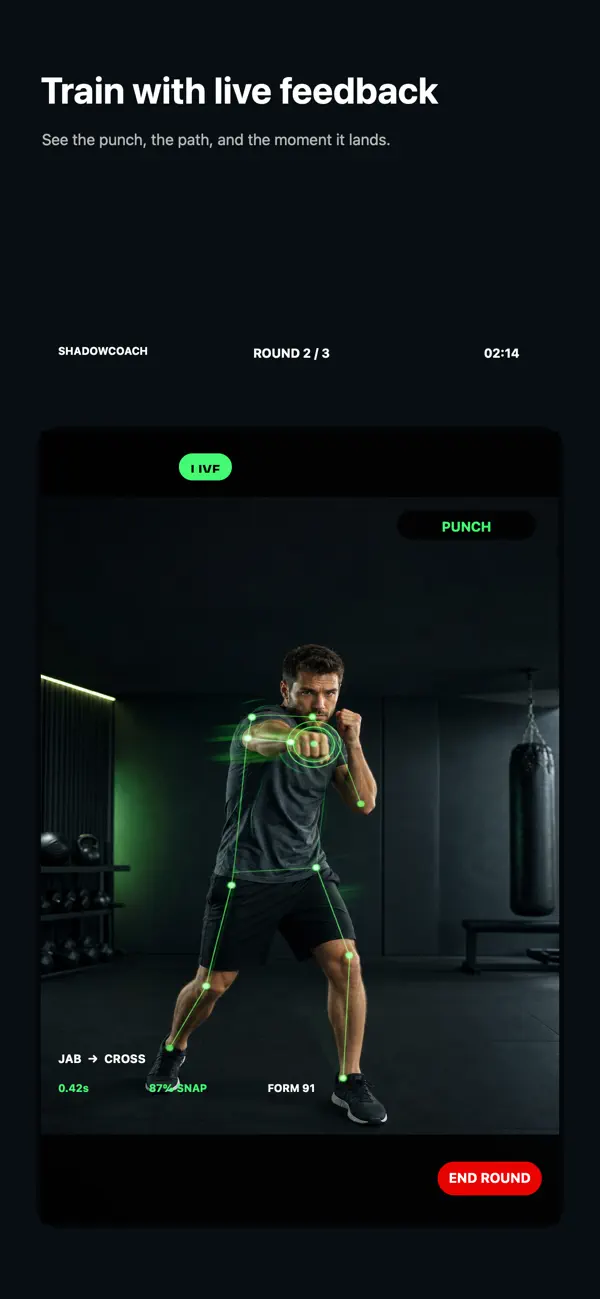
Practising boxing alone at home works best when the session has a clear boundary. You do not need a large setup: enough space to move, a timer, sensible intensity and one technique to pay attention to. The goal is to make the next round useful, not to turn every workout into a test of willpower.
Start with movement, not punches
Warm up with easy footwork, shoulder circles and light shadowboxing. Check the floor, remove obstacles and keep enough space to move without hitting furniture. If you are returning after a break or have an injury, use professional guidance and stop when something feels wrong.
Give each round one job
Short rounds are easier to learn from. Use one round for stance and guard, one for a jab and one for moving after a combination. Add punches only when your feet can keep you balanced. A single useful cue is better than trying to correct your chin, elbows, hips, breathing and combinations at the same time.
ShadowCoach provides spoken form feedback for solo shadowboxing, including cues around guard, chin position and hip rotation. Explore ShadowCoach or view it on the App Store.
Use feedback as a prompt
An app can help you notice a movement, but it is not a substitute for a qualified coach or medical advice. Treat a spoken cue as a prompt to check your form, then make one adjustment and continue. If the cue conflicts with instruction from your coach, follow your coach’s guidance.
Finish with a short note: how many rounds you completed, what felt stable and what you want to revisit. That record makes the next session easier to start and prevents every workout from becoming an unstructured experiment.