Makers & Design
How to Invoice a Project Deposit and Final Balance as a Freelancer
A clear workflow for quoting, invoicing a project deposit and billing the remaining balance, with milestone wording that helps clients understand what is due.
Published October 5, 2026 · Michael at Yuzool
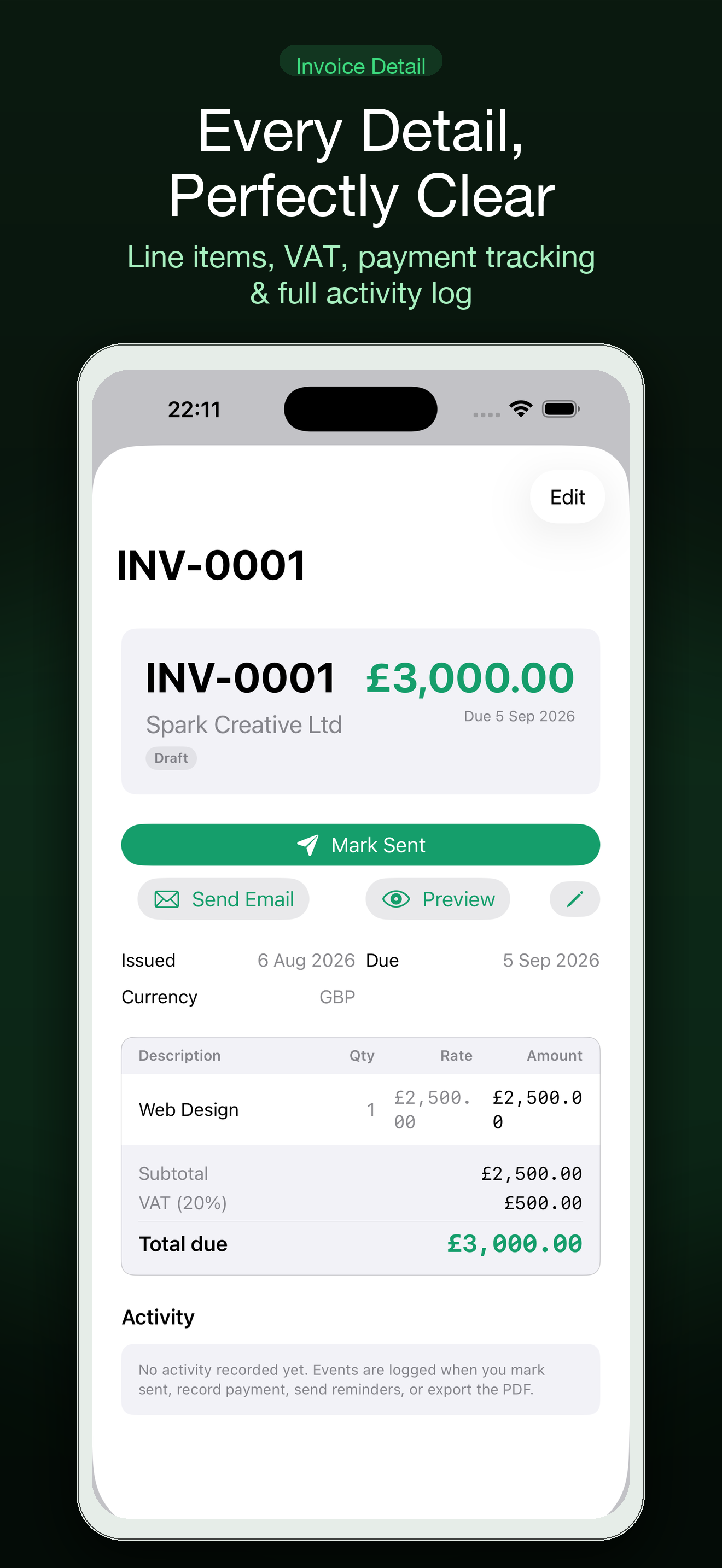
A project deposit can protect a freelancer’s calendar and give a client a clear start point—but only when the payment schedule is agreed before work begins. The invoice should make the total fee, deposit, later milestone and remaining balance easy to understand. This is an administrative workflow, not tax or legal advice; confirm contract and tax requirements for your location.
Agree on the schedule before sending an invoice
Write the full project fee and the payment stages in the proposal or agreement. For example, the arrangement might be a deposit to reserve the project, a milestone payment after a defined stage and a final balance when the agreed deliverables are ready. The exact amounts and timing depend on the work and the terms you and the client accept.
Avoid vague triggers such as “when the project feels nearly done.” Use observable milestones: approval of the initial direction, delivery of a review version, or completion of the listed scope. State what happens if the scope changes, and how extra work is estimated and approved.
Make the deposit invoice self-explanatory
Give the invoice a project name or reference, the client’s billing details, an issue date, a due date and a concise line item. A clear description might read “Project start deposit — 40% of agreed design fee” if that is the schedule you have agreed. Show the full project fee for context, the deposit amount due now and the amount remaining afterward.
Include the accepted payment methods and any relevant purchase-order reference. Before sending, check that the client name, currency, dates and arithmetic match the agreement. This small review prevents a common source of avoidable back-and-forth.
Track the balance without re-invoicing the whole project
When a later milestone is reached, refer to the original project and identify the stage being billed. Show what has already been invoiced or paid and what remains due. The final invoice should distinguish the final-stage amount from the overall project total so the client does not mistake it for a second charge of the full fee.
Keep the proposal, approvals, invoices and payment confirmations together. If a client asks for a change, record the new scope and fee in writing before adding it to the work. A short paper trail helps both sides remember what the original schedule covered.
Send a calm reminder when a payment is late
Check that the invoice reached the right contact and that the payment details were usable. Then send a brief, factual note with the invoice number, amount and due date, and ask whether the client needs the invoice resent. Keep the tone professional; do not assume a missed date means a dispute. For a reusable message, see the freelancer overdue-invoice reminder template.
Settle is an iPhone invoicing app for independent workers who want to prepare and track straightforward client invoices. Explore Settle or view Settle on the App Store.