Indie software
One Revenue Routine for an Indie App Portfolio
A practical weekly revenue routine for indie developers with several Mac and iPhone apps: what to check, what to ignore, and how to choose the next distribution action.
Published August 8, 2026 · Michael at Yuzool
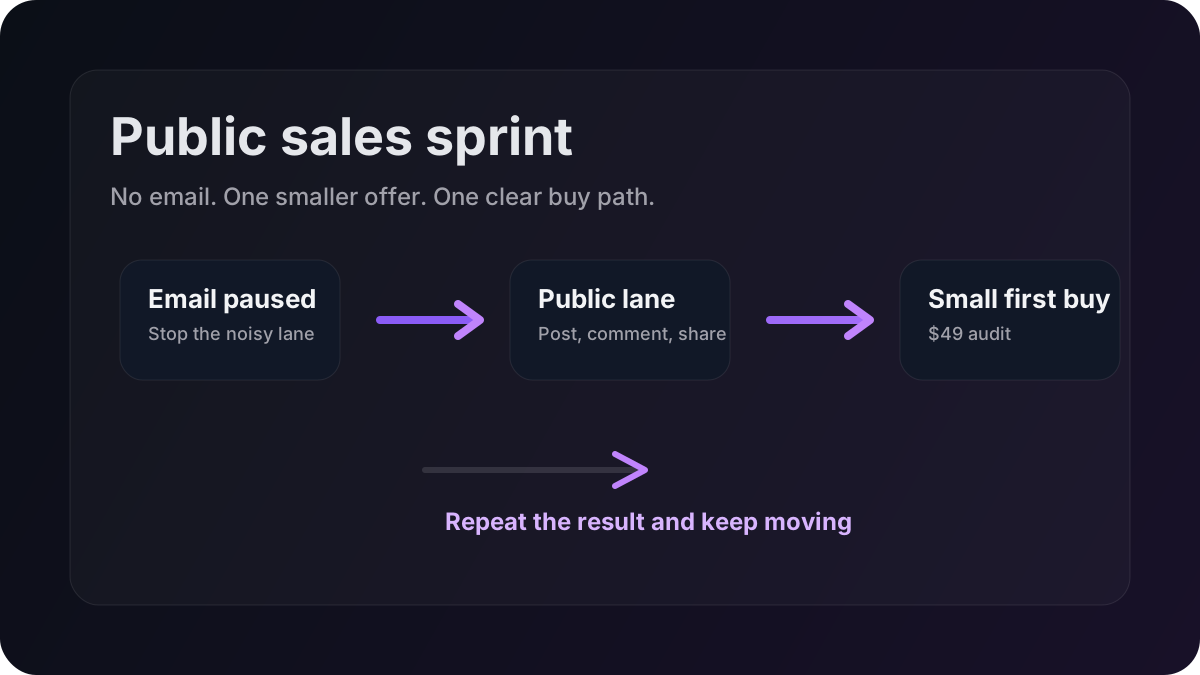
Several small apps do not need several frantic dashboards. They need one repeatable loop: notice what moved, understand why, and choose one distribution action worth doing next.
With one app, it is tempting to stare at one sales graph and call that product work. With five or ten apps, every graph becomes a distraction unless there is a simple operating rhythm.
The rule: revenue is the validation, but distribution is the daily practice that gives revenue a chance to happen.
Start with the source of truth
Use the store or payment provider for the number that counts. App Store Connect, Polar or Stripe may update on different schedules and describe different things. Keep gross sales, proceeds, refunds and payouts labelled rather than merging them into one impressive-looking total.
For the quick pulse, Revenue Bear brings product movement into a small iPhone view. For App Store Connect events and release work, Dispatch Kun keeps the operational detail close. Neither should replace the original report.
Review the portfolio in five minutes
- What moved? Record sales, trials, refunds, reviews and meaningful store events since the last check.
- Which product moved? One product is usually carrying the signal. Give it the next experiment before adding another feature elsewhere.
- Where did people arrive? Separate search, direct, directory, social and tagged campaign traffic when the data allows it.
- What is the smallest response? Improve one sentence, publish one useful answer, or contact one highly relevant person.
Give every app one job
A catalogue becomes easier to market when each product has a single sentence that a real person might search for. Rank helps an indie developer review Search Console without turning SEO into a full-time job. Suzume Mail is a focused Mac email client. Palm turns an app sentence into a product and launch direction. Dispatch Kun keeps App Store Connect events readable on an iPhone.
Those sentences are not slogans. They are filters. If a proposed page, launch post or directory listing does not make the job clearer, it probably will not create useful traffic either.
Run one distribution experiment at a time
Do not publish ten vague posts and then try to guess which one mattered. Pick one audience and one useful angle: a Search Console workflow for small agencies, a private email client for Mac users, or a way to review App Store sales while away from a desk.
Write the practical answer first. Link to the product only where it genuinely continues the job. Keep a tagged link so a visit from a directory or article does not disappear into “direct” traffic.
Keep the weekly review honest
- Traffic: which pages actually received visits?
- Intent: did those visits match the job the page describes?
- Action: did anyone click a store or checkout link?
- Evidence: was there a sale, reply, review, or useful objection?
- Next bet: what single change will be visible by next week?
A page with ten visitors and one checkout click may be more valuable than a page with a hundred accidental visits. The point of a growing portfolio is not to collect vanity numbers. It is to create more chances for a precise match between a problem and a small tool.
The routine in one line
Check the source, find the signal, explain the job, make one useful distribution move, then record what happened. That is enough for a day. Repeated over months, it turns a collection of apps into a learning system rather than a shelf of unfinished launches.